Friday, November 25, 2005

Thanksgiving Mist


It was just about three years ago I left my work as captain of the pilot boat to deal with a semi-critical situation in New York . . . my mother, with health issues, was having great difficulty taking care of the house she had lived in for 43 years.

Looking back, I can't help but acknowledge the serendipity of my last pilot run, how it foreshadowed the social and family problems I would face in the years ahead.

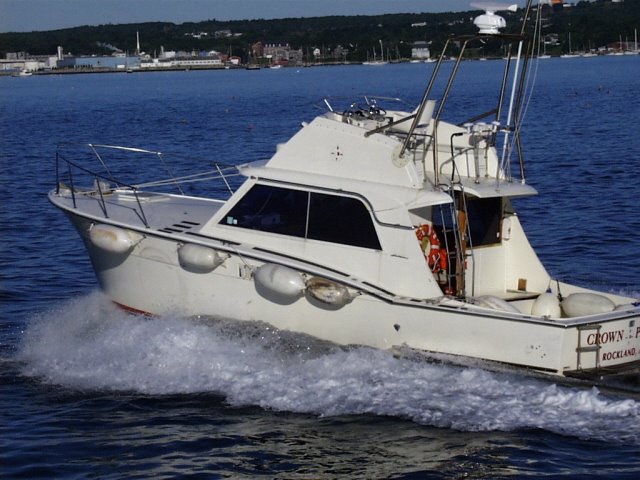
Our pilot boat was an old 36' Hatteras sport fisherman. She was more than thirty years old, and she looked it. A great design by venerable Naval Architect Jack Hargrave, but not the best built boat of her size and vintage. What I mean by the latter is simply a function of technology. Today, modern builders use non-wood core products and vacuum bagging techniques to ensure rot resistance and complete saturation of the fiberglass resin. Back then, builders used plywood or other wood core products, and only builders of the very best boats did their damdest to get the cloth to stick to the wood. If you look at an old fiberglass boat from inside, even one without rot in the core material, you're bound to see delamination and areas where the cloth has dried and frayed. Major bulkheads and stringers, and the places where these structural components are tabbed into the hull, are noteworthy areas to find these problems.

Crown Pilot showed this type of aging, and more. In addition to delamination, she had rotten spots in her bulkheads and stringers, stress crack issues, alignment issues, old sealant, and her wiring needed replacement. Wiring in a boat is only good for 20 to 25 years.

What many people don't realize is this: If an old boat cost $100,000, and you keep that boat for twenty years without doing any major work to it, you can expect to put in another $100,000 (or more) to bring it back to its original condition.

As they were saving for a new, custom built pilot boat, the owners had no intention of putting this amount of money into the Crown Pilot. What they needed was for the old work horse to "hold together" long enough for the new boat to arrive.

It was a cold, late September evening. I was scheduled to take Skip Strong off the outbound Tug, Captain Bruce McCallister. Chris Wells went as my mate, and together we left Rockland for the MP Buoy about an hour and a half before our planned rendezvous.

A few minutes after we passed Whithead Light, we smelled a hint of smoke. We checked around the boat, including the engine room, but found nothing. Figuring the cause of the smoke was a short in the bus heaters, I turned off the heater switch at the panel. At this point, we'd already had communications with the pilot and arranged for an early transfer at a patch of water called, the Devil's Half Acre. With the seas kicking up and the smell of smoke, the prudent thing to do was get the trip over as early as possible. (This area, Devil's Half Acre, provides the best lee for a pilot transfer in the wind and sea we were facing that day. In addition, the water is deep for a few miles. The deep water leaves room for a catenary in the cable should the tug need to slow way down or make a turn.)

Taking a pilot off a tug or ship in rough weather is like competing in an episode of Fear Factor, but without the nets or safety wires. Add the threat of fire on a gasoline powered vessel and you have a recipe for some very frayed nerves.

Just as I started my approach to the tug, the cabin filled with smoke and the port engine died. Chris quickly and rightly reminded me about the main breaker for the heaters, which I immediately addressed. I restarted the port engine, and Chris and I opened all the windows and doors to clear the smoke. We still had not actually located the problem, and we didn't have time for a thorough search.

Generally, it takes only a minute or two to get a pilot off a tug or ship. You don't want it to take any longer for obvious reasons. Imagine balancing on the rail of a rolling tug or hanging from a ladder off the side of a ship in a gale. Could you do that for a whole minute? Could you do that for two minutes?

After I got the pilot, I turned the helm 90 degrees to starboard in order to get away from the tug and its barge, the latter the more dangerous of the two, like the poisonous tail on a manta ray. Skip came aboard and was greeted with a mariner's worse fear, a potential fire emergency.

Clear of the tug and barge, I cut the engines and let the boat drift. The three of us went into action. Chris and Skip readied themselves with fire extinguishers while I slowly and cautiously lifted the engine hatch. Fortunately, whatever was smoldering did not live in the engine room.

The source of the problem turned out to be a corroded bus heater core, which caused the heater motor to draw more current than its feed wire or main switch could handle. With the breaker off, the threat of fire abated. The port engine problem was something altogether different. As it turned out, about 7/8ths of the way home, that engine shut down completely.

The very next day I notified the pilots I had to turn the boat over to another captain. My mother, I said, needed my help. Somebody else would have to deal with Crown Pilot. I stuck around the next morning to supervise repairs of the engine, then I headed to New York.

At first, I missed the action of the pilot boat job. I missed the commeraderie and the challenge of the work. However, over time, it became celar to me that working 24 hours a day, seven days a week, nearly 365 days a year, being on call at a moment's notice, with virtually no time off, left little or no room for family and friends.

Things are a lot different now. These days, nobody tells me where to go on Thanksgiving.

Bottom line: Even though my mother's hull and machinery are reaching their operational limits, and her wiring has gone bad, there's no replacing her. No amount of money will bring her back to original condition.

In my mother's case, there is no turning over the helm to someone else. Every shared Thanksgiving counts.

-seabgb

Copyright © Bob G. Bernstein (seabgb) All Rights Reserved!

Wednesday, November 23, 2005

Are We Sinking or Are My Legs Getting Shorter?

(by Bob Bernstein, originally published in Offshore Magazine. Illustrated by Chet Jones.)

It happened on a lake in Central Maine in the summer of 1969. I was 16 and had been hired as the new water skiing instructor for Camp Webago. Never mind that I didn't know how to water ski. The Director assured me I would know enough by the time the kids arrived. He was right, but that's another story.

I was in charge of two boats, a 17' MFG with a 65 hp Johnson, and a 16' Glastron with a 55 hp, four-stroke Bearcat. They don't make the Bearcat anymore, and for good reason. The old Bearcat was way ahead of its time -- a good idea backed by something less than perfect engineering. It was a high-concept outboard with a few problems, among them a tendency to overheat.

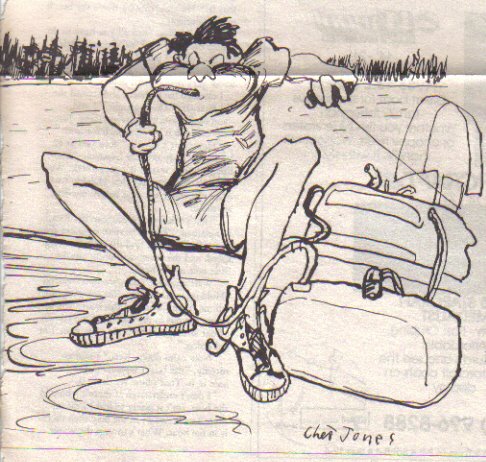
The director took me to the waterfront and left me with the two boats, both beached and full of rainwater. I decided to tend to the Glastron first. I climbed aboard, dropped the lower unit into the water, and turned the key. The engine spurted to life -- and I do mean 'spurt'; a little rubber nozzle under the bonnet was the key to proper engine performance. As long as water flowed unimpeded through the nozzle, the engine ran fine. However, as soon as dirt or air clogged the nozzle, the motor would overheat, sputter, cough, rattle, and die. Fortunately, it didn't take me long to figure out that the problem could be corrected by oral siphoning of the nozzle. After several breathless minutes of alternately blowing and sucking on the nozzle, I had the beast running smoothly.

Before heading out on the lake to drain the boat I did two things. First, I boarded the MFG and started the Johnson. I let it run a few minutes, then shut it off and pocketed the key. Second, I went into the dining room to shanghai a couple volunteers to help push the Glastron off the beach; the boat had a double hull and full of water it was heavy as a tank.

I found half a dozen counselors drinking coffee at one of the tables, but only one expressed an interest in coming along. Ken, a thick-set, blond-haired, die-hard Yankee fan from Westport, L. I., said he would help if I agreed to take him over to the girl's side of camp. I nodded heartily and together we walked back to the beach.

"I don't get down here to often," Ken said as we strolled to the Glastron. "It's not really my thing."

"Well," I said. "All you have to do is help me push it off the beach, maybe steer a little while I pull the plug."

"I probably should warn you," Ken said placing his hand on the rail. "I don't know much about boats."

"That's all right," I assured him. "I do."

Ken peaked in the Glastron with a dubious expression. "It's full of water," he said. "Shouldn't we drain it first?"

"Nah. We'll do it out there. We'll bail her through the drain plug."

"The drain plug?"

"A little hole in the back."

"There's a hole in the boat?"

"Yeah. It's supposed to be there. We get her up to cruising speed, pull the plug, and the water will be sucked out the hole."

Ken was unconvinced. "Wait a minute. Correct me if I'm wrong, but there's more water in the lake than in the boat. What's to stop the water from coming back in?"

"It's physics, Ken. Trust me. I know what I'm doing. Now start pushing."

Reluctantly, Ken rolled up his pants, heaved the boat off the beach, and climbed in. As the green and white hull of the Glastron floated a bit low in the water -- not dangerously so -- I started the motor, turned the wheel, and headed for the middle of the lake. It was flat calm. A minute or so later, with water up to our shins. I brought the vessel up to speed. The Bearcat labored. Skis, life jackets, cushions, fuel tanks, and other miscellaneous boat stuff piled aft. The bow pointed toward the skies.

"Ken!"

"What?"

"Take the wheel and hold her steady. I'll go pull the plug."

Ken maneuvered himself to the helm, cautiously, so as not to splash his pants. I went aft, dropped to my hands and knees, and reached back through the water and mess of floating junk for the drain plug. I released the dog and pulled. Nothing. I pulled harder. Still nothing. Finally, I took a deep breath, held it, and used all my strength. The plug pulled free. Water began to drain rapidly and I felt pleased with myself.

And then the old Bearcat just up and died.

"I already told you I don't know too much about boats," Ken said. "But isn't the water coming in kind of fast."

"Now don't panic, Ken," I said. "I'll just put the plug back in and get the motor started."

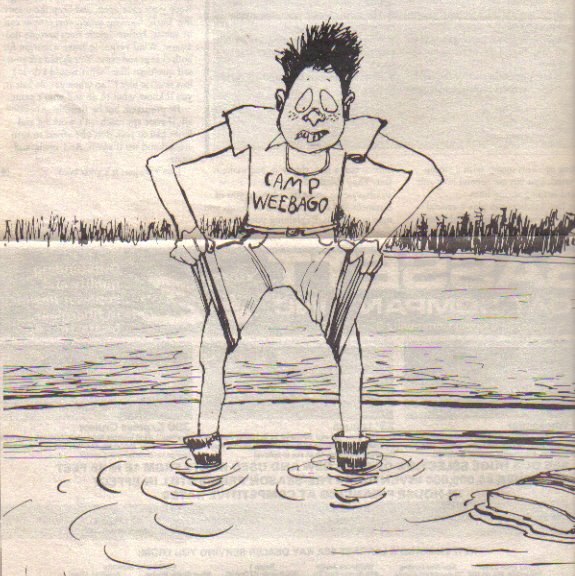
I lifted my hand to look at the plug and came to a startling realization. Soaking all winter and spring on the east end of St. George lake had swollen the rubber to three times its normal size. Nothing short of a miracle would get it back into the hole from which it came.

"Well," Ken said. "What are you waiting for? Put the plug back."

"It's swollen, Ken. It won't go back."

"You mean we're sinking."

"Well, in a matter of speaking."

"How deep is it here?"

"About ninety feet."

"Can I panic now?"

"No. I know what's wrong. It's no big deal. I can fix it. The motor's overheated because the cooling circuit's jammed. It's air or something. Just wait a sec."

"If you don't mind, I'd like to scream for help."

"I'd rather you didn't."

Ken watched me as I positioned myself over the Bearcat. "Well, as long as you know what you're doing," he said."

"I do. Don't worry."

"You going to tighten some screws or bolts or something?"

"No," I said, leaning over the stern of the boat. "I'm gonna wrap my lips around this little rubber thing and suck as hard as I... YEOW! SON OF A BITCH'S HOT."

"HEEELP... SOMEBODY... HEEELP!" Ken screamed.

"What the hell are you doing?" I asked, leaning over the rail and dabbing cold water on my lips.

"Sorry. But if it's all the same to you, I'd rather yell for help. I don't think you're going to fix anything like that. No offense." Ken faced the beach and waved his hands over his head.

"Heeelp... Somebody... Heeelp!" he hollered.

Just then my new boss, the Camp Director, walked down to the beach. We could see him looking at us, then cupping his hands to his mouth. The words came across the lake clearly and distinctly. "Are... you... in... trouble... ?"

"Ken... " I was begging now. "Don't go starting a panic. As soon as this thing cools I can start it. Just be calm and don't say anything to worry him. It's really not as serious as you think."

Ken looked at me questioningly, then at the beach. "No problem," he said. "I know just what to say." He cupped his hands to his mouth and yelled: "We... are... sinking... !"

"Great," I said. "Now all he has to do is ask me where the key to the other boat is?"

"Where's... the... key... to... the... other... boat... ?" the Director yelled.

"Where is it?" Ken asked.

I was laughing. I couldn't help myself.

Ken scowled. "I don't really see the humor here, Bob. I mean, the boat's broken. Water's pouring in through the back. My pants are wet. It looks like a long swim to shore. Why don't you just tell him where the damn key is?"

I reached into my pocket and produced the tiny key. "It's right here." I gave it to Ken. "You tell him where it is." Ken shook his head.

"Where's... the... key... to... the... other... boat... ?" the Director yelled again.

I had no choice. I cupped my hands to my mouth and answered. "It's... in... my... pocket."

The director's head dropped to face the ground. He turned and walked away from the beach. He wasn't in any hurry, as if maybe he didn't really need two ski boats, or a new skiing instructor. In fact, he was controlling his heart rate with tabs of glycerin and headed for the nearest telephone.

Ken resigned himself to his fate. He walked forward into the open bow and made himself comfortable, lifting his legs over the gunwales to keep his pants as dry as possible.

Me, well I knew what I was doing all along -- sort of. After the motor cooled I cleared the obstruction in the nozzle, started the Bearcat, got the Glastron drained, and learned two valuable lessons. I don't take anything apart that I know I can't put back together. And I have a lot of spare keys.

-seabgb

Copyright © Bob G. Bernstein (seabgb) All Rights Reserved!

Shhh . . . Let Him Sleep

I heard this story about a charter fisherman whose usual mate called in sick the night before a big tuna trip to the canyon. The mate knew he was leaving the captain in the lurch so he told him he'd send a replacement, a friend who he said could handle the task at hand. The captain didn't have much choice. (This story goes back a ways. Today, with random drug testing, an owner/operator has to be more discriminating.)

The next day the replacement showed up at the dock as promised. He weighed about three hundred and fifty pounds and looked like hell. The first thing he did on the boat was slam down a box of jelly doughnuts. Then, after the boat shoved off, he went into the salon and stretched out on the convertible sofa, whereupon he fell fast asleep.

The captain, a little peeved about the mate's obvious laziness, went to the flybridge and began what was to be a five or six hour trip to the grounds.

After about three hours at the helm, the captain couldn't stand it anymore. He switched on the autopilot and descended the bridge ladder, intending to inform his new mate if he didn't take a turn at the wheel or mix up some chow for his customers he wasn't going to get paid. However, when the captain walked over to the mate and called his name, he got no response. He yelled at him, then shook his shoulder. The mate was stone-cold dead.

Rather than terminate the trip, the captain told his passengers the mate wasn't feeling well. He recommended they not bother him -- and they didn't. In fact, when it was over, they had a pretty decent trip. They caught some tuna and had a lot of fun. They even gave the captain a tip for the mate.

Sly captain went one step further and avoided a Coast Guard inquiry by calling 911 and claiming the mate stepped off the boat and collapsed at the dock. Ambulance came, pronounced death. End of story.

At least I think it was the end. For all I know the sly captain is serving 1 to 3 years for something, at the very least transportation of a corpse.

Of course, this story illustrates the value of a good mate. I've been blessed over the years with the best, and, like every other captain, I've suffered through the worst.

When I was sixteen I learned three valuable lessons from my thirteen year old brother, now a well respected surgical radiologist. The first: Never take anything for granted. The second: Never try and push a boat off a beach stern first. And the third: Don't go where you're not invited.

My brother and I had been fishing Western Long Island Sound in my father's boat, a 23' cabin cruiser with a single outdrive. Sometime in the late afternoon, while steaming between Execution Rocks and Stepping Stones, we developed motor trouble. I looked around, saw salvation, and made for Crescent Beach. My plan was to drop anchor in the bite between Barker Point and Sands Point. I knew we would find good holding bottom there, and anchoring in the shoal water would keep us out of the traffic going east and west.

Crescent Beach is the local name given to a pebble-strewn stretch of private property that looks like something out of F. Scott Fitzgerald's imagination, or maybe it was the other way around. Anyway, the point is that ordinary people aren't supposed to walk in the footsteps of the Great Gatsby. Nor should they disrespect signs that read Private Property, No Trespassing, or Violators Will Be Shot.

When I got into fifteen feet of water, I hollered to my brother to drop anchor. Without a moment's hesitation, he had the hook up and over the side. Unfortunately, I'd detached the rode a few days before (to spray the anchor with zinc paint) and the hook went sailing into the Sound never to be seen again.

As usually happens on the water, little problems beget bigger ones, which is precisely what happened on that fateful day.

After we lost the anchor, the engine failed, the boat drifted side-to, and we hit the beach like a dead whale. I had just enough time to up-end the outdrive with the power tilt.

While the boat pounded and scraped on the beach (nothing life threatening, mind you), my brother and I got the engine started (turned out the master fuses had shorted) and tried to push her off the beach stern first. I figured that once the outdrive was in deep water, I could back out. However, the two of us alone couldn't move the boat against the wind and chop. We needed help. And so my brother went up the hill to find a couple of good Samaritans. Five or so minutes after he had disappeared over the dunes, a stranger appeared with some important advice. "You'll never get her off that way," he said. "You've got to push her bow into the waves."

The beachcomber and I pushed the boat into knee-deep water, and while he held the bow into the wind, I jumped aboard and lowered the outdrives just enough to cover the props. A minute later I was safely off the beach.

Meanwhile, my brother had walked across an expansive lawn to the tiled patio of a beautiful mansion. He approached a sliding glass door and saw a woman in a bathrobe talking frantically on the telephone. She was waving her hand at him and yelling. He thought she was saying: "I'm getting some help". But when he got closer, he realized she was yelling: "I'm calling the police on you!" He tapped on the glass and tried to explain that we'd gone ashore, and she answered him with: "I have a gun and I know how to use it!" (Imagine that, a grown woman in a multi-million dollar house scared of a thirteen year old boy in wet shorts.)

I'm sure it was all a terrible misunderstanding, but when I saw my brother again, he was running toward the boat and flailing his arms like a madman. A couple of hundred feet behind him, gun drawn, was a uniformed police officer. This unexpected turn of events, unfortunately, prompted the kindly beachcomber to flee eastward at a high rate of speed, and, as a result, I never had the chance to thank him.

I know now that my brother should have stopped, but he didn't. Instead, he jumped in the water and swam to the boat, whereupon I hoisted him aboard, put the engine in gear and sped away. No shots were ever fired, and everyone lived happily ever after.

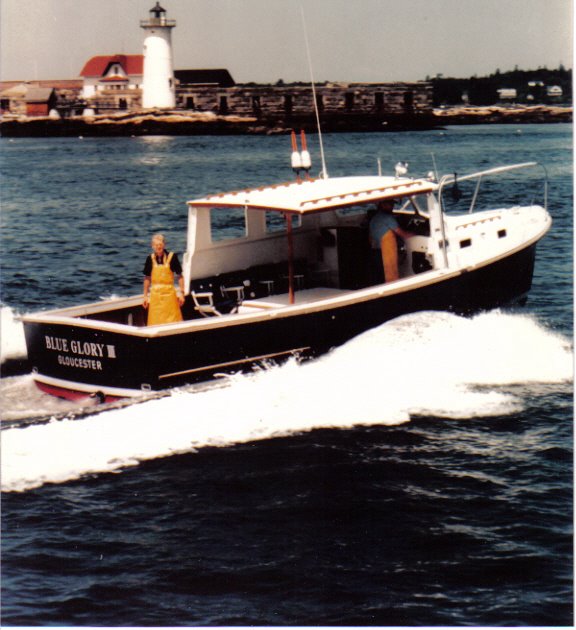
Many years later, on my last boat, Blue Glory III, I had an equally instructive experience . My recently hired mate and I were taking a group of six wreck divers to a sunken liberty ship. We were headed southwest on the long leg of a three hour steam when I asked the mate to cut some webbing for some weight belts. He went on deck and took care of it, then came back to have a turn at the helm. A few minutes later I looked around and figured we were skewed off course. I yelled to him from the deck to make sure we were on the right heading. He answered back that we were, and read off the compass heading, which was correct.

A few more minutes passed and I still couldn't shake the feeling we were going in the wrong direction. I walked back to the helm and looked at the compass. Sure enough, he was dead on, except for one thing. He had laid his steel knife right next to the compass. The course he thought was right was really wrong. It had deviated fifteen degrees by the magnetic interference of the steel knife.

Good mates are damn hard to come by. When you find one, you know right from the start how lucky you are. Good mates don't have to be told how to adjust the fenders when you land at a new float, or how much scope you need on a dock line, or where to stow gear, or how not to oversteer in a following sea. They don't have to be reminded to walk around the boat and make sure everything is in its place. In fact, they think of things about a half a second after you do.

Perhaps there's no place more worthy of a good mate than the deck of a fish boat. Fishing compounds a mate's job about ten fold. Whether it's a charter boat, a head boat, commercial fish boat, or a recreational sportfishing boat, a mate's abilities can make a big difference in the day's events.

On a party fishing boat, a mate has to be proficient at untangling snarls, as well as gaffing and cutting fish. He or she also has to get along fairly well with people, and be extremely reliable. (If the mate doesn't show on a given day, and a captain leaves the dock alone, there's a good chance he's in violation of his Certificate of Inspection.)

On charter and private sportfishing boats, the mate doesn't have to untangle as many snarls, but he or she has to be equally good at gaffing and cutting fish. And there's the added complication of rigging bait and handling leaders on boats that troll for the big ones.

My friend John used to own and operate a party fishing boat out of the same dock from which I used to run. He fished for cod, cusk, hake, and pollock, groundfish mostly. His old mate, Bruce, was (and probably still is) a big man, the kind of guy you think can drive sixteen penny nails with his thumbs.

One time one of the passengers on John's boat consumed a little too much beer. John told the guy nicely that enough was enough, that time had come to abstain from the brew, but the guy refused to listen. Instead, he reached into the cooler and grabbed another beer. But just as he prepared to pop the lid on the can, Bruce came up behind him, wrapped his big maw around the guy's hand -- beer and all -- and squeezed until the can burst. The guy didn't drink any beer after that.

-seabgb

Copyright © Bob G. Bernstein (seabgb) All Rights Reserved!
Tuesday, November 22, 2005

Making it to TV


A little history:

Last winter I decided to sell some junk on eBay. A few items got sold, and, as a result, I was in the market for more junk to sell. My friend John had this old, wooden Century runabout somebody had given him. The boat was under cover in his yard, under a foot or more of snow and ice.

One day I went over to John's house and found him cleaning out his house and shop, I asked him what he planned to do with the old boat. "That rotted old thing," he said. "I'm going to cut it up with a chain saw and take it to the dump."

I went over and looked under the cover and lo and behold there was indeed a rotted old boat under there, but it had a good deal of its original hardware, and even the original flathead engine. The transmission shifted, and the inside looked pretty clean. I offered to sell it for him on eBay. "Knock yourself out," he said.

Literally, as it turned out, I did just that.

To get some photos of the boat, I had to remove the cover and do some cleaning and straightening. The whole endeavor -- uncovering the boat, straightening and cleaning, taking inventory and photos, covering the boat again, listing it on eBay, etc. -- took a few hours, maybe half a day. But right off the bat the listing had a lot of hits and watchers, with a few interested parties requesting additional photos. I went back to the boat, removed the cover, which was now ruined, and took some more pictures.

Cover ruined, I folded it up and threw it in the back of my truck. To keep it from blowing out on the way to the dump, I picked up a piece of blocking. This was a 16" x 16" timber that had been cut about 3-1/2' long. Must have weighed at least 50 or 60 pounds. I picked this thing up and was about to throw it over the tarp in my truck when I slipped on a patch of ice under the snow and fell backwards, folding my ankle in a way it was not suppose to be folded. As I hit the ground on my back, the timber landed on my chest and knocked the wind out of me. As John had suggested, I had knocked myself out. I'm pretty sure I also broke my ankle.

Boat sold for $103.50, half of which I gave to John.

Hence, I wasn't all that excited when John asked me if I wanted this old Si-Tex recording fathometer he was throwing away. When I finally looked at it, however, and remembered owning one myself, I had to have it. Another item for eBay, I thought.

I kept that useless 60 pound hunk of metal and ancient technology in my garage for six months. Tried to sell it on eBay all that time too. $10.00. No takers. Then one day, fed up with looking at it, I loaded into the back of the truck. It was bound for the dump.

That night, I watched this TV show for the first time. Called Surface. About an infestation of dragon-like marine creatures and the people who discover and are affected by them. Kind of a Spielberg-esque thing.

When I woke up the next morning, there was an email in my eBay inbox from the Prop Master of the show. He wanted to buy the Si-Tex recorder.

The Recorder went from being on its way to the dump to national exposure on a prime time Network television show.

If I'm not mistaken, the episode appeared last night.

-seabgb

Copyright © Bob G. Bernstein (seabgb) All Rights Reserved!
Monday, November 21, 2005

We're Not Stupid


The older I get, the more I have to remind myself to take my time, think things through and make sure I have all my ducks lined up before embarking on a given project.

A few weeks ago I had to go out to my boat in a 50 knot gale. I can look back on that experience and say I did everything right. I had a plan laid out in my head, one I'd taken the time to examine carefully for holes and miscues, followed the plan one step at a time, and managed to come home with nary a scratch. Can't say that happens all the time.

On a fishing trip many years ago I accidentally gaffed myself in the neck. We were 40 miles offshore, and the guys who had chartered the boat had the combined maritime experience of a desert vole. I was lucky. I didn't decapitate myself. Not only would it have been virtually impossible for me to get back to shore and safety, my charter party would have been stranded out there with a captain who looked like the last victim of a grade-b slasher movie.

This is what happened:

I used to steam out to the grounds with the hydraulic pump for the hauler disconnected from the engine. When I'd get to the spot, I'd anchor up, get everyone fishing, then go back and set the belts on the pump. To do this, I'd typically lean into the engine room and bear down on the pump with the butt of the fish gaff in one hand and a 9/16" wrench in the other. This particular day it was kind of rough and the boat was bobbing around like a cork in a wash tub. The guys were catching doubles and screaming for me to help tend the fish. Seawater was sloshing through the scuppers in fire hose fashion. And it was cold and raw. Fairly normal fishing day, actually.

I don't know what it was exactly. Maybe my fingers were numb from the cold, or maybe someone on deck hollered something noteworthy. Add the rolling and the pitching. Whatever, my hand slipped, and the business end of the gaff came down into my neck. I stood up in about half a second and took stock of the feeling. Luke warm. Wet. Stinging pain.

There was a little mirror in the cabin and I went down to check the damage. Fortunately, the pointed end of the gaff just skidded from the back of my neck all the way around to the front, in the shape of a half moon, not too deep. I would live to fish another day.

I sprayed myself with antibiotic, went back on deck, and took a pair of doubles (two nice cod) off of Ed's line. He glanced at me, then looked at me again, then looked a third time close at my neck: "What the hell you do, Bob, try to hang yourself?"

From that day on I decided to take things a lot slower. I didn't want to become a statistic, or the subject of an editorial like this one. Because people die in unnecessary ways, and other people talk about them.

A few years ago, mid-winter, a guy here got drunk and decided to row a canoe out to his dragger in the harbor. Dumb move. Slipped getting out of the canoe and fell in the water. Done deal.

Another guy, a recreational boater, was working on his ketch by himself. He leaned into the engine room from the deck and got stuck upside down. That's the way they found him.

A few years ago, the former captain of a mini-cruise ship was decommissioning the vessel after the company that owned it went bankrupt. He was in the engine room and accidentally set off the fire suppression system. He tried to escape and got caught in one of the emergency doors as it shut automatically. He was cut in half.

I could go on and on.

Not too long ago, a local fisherman, well, known and well liked, was out dragging with his son and his son's friend. For whatever reason, the vessel started to sink. (Very often you don't realize you're sinking until it's too late.)

The boys went on deck while the father hurried into the forward cabin to get the survival suits. It was then the vessel capsized. Both boys got off and were eventually rescued. The father got caught inside and went down with the boat.

I can't tell you how often I go on someone's boat and find the survival suits tucked in a locker in the forward cabin. Survival suits should be stored as close to deck as possible, preferably right next to the main door(s). Not saying this is what happened above. Without facts, I would never presume something happened a certain way on somebody else's boat. I'll leave that to amateurs like Sebastion Junger, who can speculate on the unknown and in so doing end up richer and more famous. (A little drama and a little prose go a long way toward financial security.)

Thing is, in two of the examples above -- the captain decommissioning his vessel and the fisherman whose boat capsized -- we're talking about experienced hands. Careful, cautious seafarers. People who take the time to check and recheck.

Last night, when I went to the boat, I wore my life vest. I always wear my life vest now. Never used to. I wear it out and back in the skiff, take it off when I get to the big boat. That's standard procedure.

Nevertheless, last night I still did something stupid. After I finished working on the big boat, I threw the vest in the skiff, instead of donning it before climbing over the rail. If I had slipped and fallen in, 50/50 I would have heard the fat lady sing.

I once mentioned to someone that a mutual friend had made a foolish mistake. The guy I was talking to remarked: "Is there any other kind."

And yet, given the above, I have to add the following: Just because I'm not perfect and slip up once in awhile, doesn't mean I want the government to assume I'm stupid and legislate accordingly. Neither do I want big business thinking for me.

We have cars that automatically lock the doors when you engage the transmission. We have seat belt alarms and all sorts of other safety oriented impositions on our lives. Yes, we make mistakes, but we're not stupid.

When you hear about people drowning, and you read in the paper or hear in the news the person or persons didn't have on their life jacket(s), the implication is this is the reason they drowned. We're led to believe they were stupid and careless.

No matter what you hear in the media, you can't wear the vest all the time. You just can't. There's work do be done in cramped places. There are vessel compartments -- like the main ballroom on a cruise ship -- where you'd look like an idiot wearing one. Trust me, there are times you should not or need not wear a life jacket. People who don't know about these things would like you to believe otherwise.

Let's agree smart people make mistakes. And let's agree it helps to remind people of the pitfalls and risks. But please, let's not try to legislate or manufacture stupidity avoidance.

-seabgb

Copyright © Bob G. Bernstein (seabgb) All Rights Reserved!
Sunday, November 20, 2005

Waiting for the Wind


Tonight NOAA Weather radio reported a not so favorable forecast. Not unusual for this time of year. A low from the west combining with remnants of a tropical storm in the Caribbean, reforming off the coast of the mid-Atlantic states and tracking north. Another low, an Alberta Clipper, tracking across the Great Lakes and looping northeast through the New England states. Both systems bringing gale force and maybe storm force winds to the area Tuesday and Thursday. A double whammy.

For me, it means making sure I've hunkered down the boat on its mooring. For Lobstermen in the area, it means getting out now and shifting gear, or, at the very least, hauling as many traps as possible, before the wind arrives. The old saying You Got to Make Hay While the Sun Shines applies to fishermen as well as farmers.

Trawl fishermen and scallopers won't want to be caught in the weather, but many of them won't have a choice. Some of the bigger boats, out of New Bedford and Gloucester, were built for extreme weather. Doesn't make it fun, or even all that safe. Even the finest, most capable vessels find themselves in dire need.

A friend of mine once asked me, "Why is it when the excrement hits the fan, it always does it at night?" It was a rhetorical question. Reminds me of something my Spanish grandmother always said. She said it in Spanish. Translated, it means: "At night, all the cats are black."

When you're out there and you hear a report like this, you end up wondering about all the little things you didn't do, all the little repairs you either neglected or postponed. Like maybe instead of using a new wire connector on that lead from the alternator you just wrapped it with a little electrical tape. Last time you looked, it was starting to unwrap from the heat in the engine room, and one of the cable clamps seemed loose.

Maybe there was a partially rotted hose on one of the through-hulls that needed replacing. You meant to deal with it but then your kid wrecked his car and broke his leg and you spent the weekend at the hospital making sure he got proper medical care.

These are the things you worry about.

Years and years of Coast Guard accident investigations proves what happens when little problems combine to create big problems. It's a daisy chain of disaster. The hose breaks and water starts flooding into the bilge. You realize this a little late, as the vessel starts to wallow with the added weight of her unwanted ballast. You figure there's still time to get down there and shut off the valve, but then the little wire from the alternator pulls against a manifold and a spark sets the engine room afire. Now you can't get down into the bilge because of the heat, and fighting the fire is made more difficult because the boat has lost stability.

I'll be out checking on my boat during these next two blows, but my mind will be on those less fortunate souls caught in the thick of it. Let's hope if they have little problems, none of them add up to catastrophe.

-seabgb

Copyright © Bob G. Bernstein (seabgb) All Rights Reserved!

Whale Rescue


On Tuesday, June 29, 1995 35 passengers on my boat were called upon to rescue a three to four ton minke whale from the ropes of a whole bunch of lobster traps. The whale, smallest of the baleen whales, had anchored itself to the bottom after becoming hopelessly entangled in fishing gear.

That morning, we had started out late because the ground wire to the engine failed to make good contact. I tracked down the problem while the passengers on deck drank coffee and ate donuts. It was a beautiful morning even though my stress level was rapidly approaching critical stage. Engine problems are bad enough, but when they coincide with a scheduled, prepaid trip, they make life (and business) unbearable.

However, good people take postponements and even derailments in stride, and my guests helped the situation by appreciating a day out on the water, even if they hadn't as yet left the dock.

Finally, with the engine repaired, and the diesel thrumming, we headed out, our destination . . . Matinicus Rock and Seal Island, where we would spend a few hours with puffins and other seabirds.

Glassy smooth seas awaited us as we rounded Monroe Island and pointed South. But about halfway there, or a little less, in a shoal known as Bay Ledge, I spotted what looked like a giant inner tube bobbing on the surface. I motored over and discovered a 30' minke whale with his (or her) tail wrapped with the rope or warps of at least two dozen lobster traps. He (or she) wasn't going anywhere, and worse, with the tide flooding, chances were good the whale would soon drown.

I couldn't dive in the water to set the whale free because I had passengers aboard and couldn't leave the boat. If something had happened to me in the water, and I was left unable to run my vessel, I'd be derelict in my responsibility to my passengers. In my business, passenger safety is priority one.

What we did was maneuver the boat alongside the whale. We gaffed the warps on the whale, and the men aboard, working together, pulled its tail as high as they could. At the same time, several men grabbed my ankles and hung me over the side. Knife in hand, I cut at the tangled warps.

This was not as easy as it sounds. The whale did not want its tail in the air because this forced its head and blowhole under water. Poor thing was already sunbaked and exhausted.

But the rescue attempt worked, We freed the whale and watched him swim off. At first, as it made its way through the water, its brush with death left it severely hampered. We followed him for several miles as it tried to swim normally, but clearly it could not move its tail in a normal fashion. The whale looked like it was stuck in the position we found it in. After ten or fifteen minutes, the whale straightened out. It dove under water and we lost sight of it for fifteen or twenty minutes. It was starting to look bad for the whale.

When we saw the whale again, it rose high out of the water and let out a big visible charge of air and spray from its blowhole, not typical behavior for a minke. They normally rise to the surface very flat and usually don't have a visible spout. Passengers clapped and cheered, a few even cried.

I've swum with whales before, and have seen many, may more over the years. This was my first rescue. It felt good. I'm pretty sure the whale liked it too.

-seabgb

Copyright © Bob G. Bernstein (seabgb) All Rights Reserved!
Saturday, November 19, 2005

Running a Maine Pilot Boat


(originally published in Offshore Magazine)

". . . this is the tanker Mechanic Gorovnik, do you read me? Over."
The voice comes over the VHF thick with an accent; it's strong and precise, but sounds faint because the caller is more than 30 miles away.
"Mechanic Gorovnik," we answer, "this is the Crown Pilot. We are underway to meet you. Captain, may we have your ETA at the station one-and-one-half miles southeast of the two-whiskey-bravo buoy?"
"Yes, Crown Pilot. We will be one and one half miles southeast of 2-W-B at 0-2-3-0. . . in approximately one hour, one hour. Over."
"Mechanic Gorovnik, Crown Pilot. Roger your ETA at 0-2-3-0 hours. We will be there waiting for you. . . Captain, at this time, we would like to request a port side ladder, a port-side ladder, with the ladder set one-and-one-half meters above the water, and a boarding speed of seven knots, seven knots. Over."
"Crown Pilot, Mechanic. I am reading a port-side ladder, one and a half meters above the water, and a boarding speed of seven knots. Is this correct?"
"Yes, Captain. Correct. Is there anything else at this, time, Sir?"
"No, Crown Pilot. We are all set. Thank you."
"Very well then. We will meet you one-and-one-half miles southeast of the two-whiskey-bravo buoy at zero-two-thirty hours. This is the Crown Pilot clear on channel 10, standing by on channels 16 and 13."
"Mechanic Gorovnik standing by on channels 16 and 13."
Sound familiar? It might if you've ever monitored radio communications between The Penobscot Bay and River Pilots' Association (PBRPA) and the ships they guide in and out of Maine's midcoast waters.
The PBRPA, a Belfast, Maine company, has a complement of five pilotsóCaptains Dave Gelinas and Rob Spear (the principle partners), and Captains Skip Strong, Jeff Cockburn and Richard Carver. These five men, as well as approximately a dozen other licensed pilots from other Maine companies, are responsible for making sure that inbound and outbound ships stay out of harms way. Petroleum products, road salt, gypsum, even tapiocaóan important ingredient in the manufacture of certain paper productsóenter our waters under the watchful eyes of the pilots.
The pilots get the ships in and out of the bay, and the captains of the pilot boat get the pilots on and off the ships.

The Challenge

I've been working on the water for over 30 years, the last 25 as a professional captain. I've caught giant bluefin tuna and shark, swum with and rescued whales, been a treasure hunter and dive tender, and run all sorts of vessels from ferries to water ski boats. Yet, from a boat operator's point of view, speaking just from my own limited experience, nothing compares to the challenge of running pilots to and from ships in exposed waters.
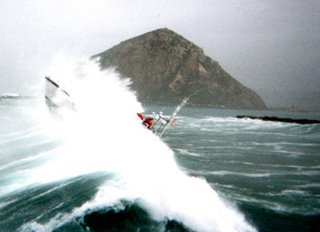
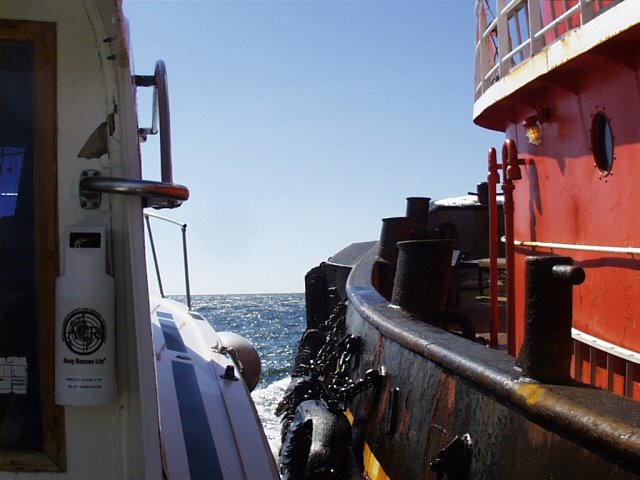
What's it like? Well, picture yourself at the helm of a 36-foot vessel running at 14 to 16 knots. in near gale conditions. You're in the lee of a 650-foot ship, 20 or 30 feet from the hull. Ahead and astern, beyond the protection of the tanker, the sea is a broiling mess of gray-white foam. Close by, spray circles in a venturi of turbulence and back drafts.
You can smell the ship's cargo, diesel, jet fuel, gasoline or number six heating oil. You can smell fresh bottom paint. Sometimes, when a ship is carrying asphalt, which is cooked by internal fires or steam coils to keep it from solidifying, you can actually feel the heat radiating from the hull.
I remember when I first started, I would get momentarily distracted, hypnotized almost, by these and other sensations. One of the weirdest things is the eerie sense of motion, or, I should say, the lack of motion. It happens when the pilot boat gets alongside and matches the ship's speed. Suddenly, there's the illusion that both vessels have stopped dead in the water, despite the fact that the sea between them is sliding backwards at 7 to 16 knots.
No question about it, it's an interesting way to spend time on the water. How did the opportunity arise? Well, Dan Merriam, the pilot boat's primary captain, called me a year and a half ago to ask if I'd be interested in filling in. I went a couple of times as mate and snapped to the job like a hungry bluefish on a chunk of fresh herring. I was motivated by three things: the supplemental income, the thrill of the work, and the boat itself.
Crown Pilot is a modified, twin-screw, 36-foot Hatteras sportfisherman that has been retrofitted with 18-inch fendering, speed props, grab lines, and enlarged rudders. She has good electronics and low-hour, 350-horsepower Crusader engines. For the most part, she's your basic early 1970s fiberglass Hat, a decent sea boat with a deep-V hull, modest flare, and a high profile bow. (Thank you Jack Hargrave for a beautifully designed sea boat!)
How does she perform?
Let's just say that we've taken this boat out in some very significant seas and we've never put the bow under. Other small boats might be as able, but we haven't tested them the way we have Crown Pilot. After all, what sane person would choose to go out in a small boat in a gale, or worse, a winter storm?
When you run a pilot boat, however, you have no choice. You have to be ready to go any time day or night, and you have to be prepared for rough seas. With operating costs of $8,000 to $15,000 a day for foreign-flagged vessels and $20,000 to $25,000 a day for United States-flagged vessels, big ships hardly ever wait for the weather.

[Note# This boat quickly tired of the job and had to be replaced by a real piot boat designed and built for the demands of close quarter contact and heavy seas. By the time I left the pilots, the Crown Pilot was virtually done for. On my last trip, a small fire broke out in the bus heaters and one of the engines failed. Though a good design, she was over thirty years old; never was she meant to do this kind of work.]

Wrestling with Wind and Waves

Piloting can be a dangerous job, but clearly the toughest part is when the pilot steps from one vessel to another. Over the last 100 years, men and women in this profession have had ladders unfasten and fall out from under them. They've had pilot boats yank them off of hulls and slam them back into them with grave consequences, including broken bones and internal injuries. Pilots have been crushed between boat and ship, fallen onto decks from heights of twenty to thirty feet, and been sent into the drink. Avoiding mishaps such as these requires patience, as well as a certain "technique."
The method Dan and I use for maneuvering the Crown Pilot alongside a big ship is as follows:. Step 1. Spread your legs like a sumo wrestler to lower your body's center of gravity and get a good view through the top of the pilot house windows. Step 2. Hook two fingers of your right hand into a spoke of the steering wheel and grip the throttles with the fingers of your left hand. Step 3. Start sidling in.
At this point, timid adjustments of rudder angle just don't cut it. In worst case scenarios, I'm spinning the wheel hard over to hard over, as fast as I can, rudder stop to rudder stop, just to keep the vessel going straight. At the same time, I'm cycling the throttles up and down, the port engine, then the starboard. Faster, Slower. First one then the other.
Every ship is different and every run has its own peculiarities. We might have perfect weather, calm seas, and a great lee from a deep-draft, high-sided ship; laden tankers with low sides, and tugs with barges are the worst. We might be thinking the trip alongside will be a breeze. But then five feet away from the vessel's hull, we'll hit a strange current or a queer wave.
The combination of high winds and seas, the dead of night, and snow make the job particularly challenging. I remember one night when blizzard conditions made radar contact extremely difficult; Crown Pilot was virtually lost in the troughs. When we neared the pilot station, the ship lighted her decks and turned on her big searchlight. At a quarter mile, she looked like a fuzzy white ball. But that night the ship provided an excellent lee. We pulled alongside and made our exchange easily. The pilot was Rob Spear and I remember being pressed hard against the ship and having to hold the boat steady for a fairly long time until he was up and over the tanker's rail; hard as I was against the hull, I was concerned that if I pulled away too soon, the ladder would come with me.

Critical Timing

Big swells double, even triple, the risk. Picture this: a pilot is waiting to get on a ship in an eight-foot swell. The vessel's ladder is set four-to-six feet above the top of the highest wave. With the pilot boat in the trough and the ship rolling away at the top of a swell, the bottom rung of the ladder can be 10 to 15 feet over the pilot's head.
In a situation like this, the captain of the pilot boat has no choice but to "stick" the landing, and by this I mean that when there's a big swell, putting a pilot on a ship is more like shooting skeet than anything else. The skipper has to wait for the right moment and hit his target squarely. He has to get in and get out fast, preferably when both Crown Pilot and the ship are rising or falling at the same time.
With an outbound ship, we wait for the pilot to start down the ladder before we begin closing the distance. Ideally, we try to arrive at the exact moment he's ready to step off the ladder and onto the boat. The less time he spends in that precarious position, the better.
With an inbound vessel, we wait for the ship or tug to slow to boarding speed. As soon as it does, and the pilot steps into position on our bow deck, we start heading in.
Meanwhile, the pilot knows what to do. He knows not to step off the boat until he's sure he has a good handhold and a solid purchase on the ladder. Going the other way, he knows not to step for the boat until the time is right; at the very least, he'll wait for a landing zone that won't disappear when he gets there. However, anyone who thinks coming alongside a ship is a challenge, should try stepping on and off a Jacob's Ladder when everything around is a maelstrom of motion.
"Crown Pilot, Mechanic Gorovnik. I am slowing to boarding speed and will be at 7 knots shortly."
The vessel's deck lights come on, as do our's, and the ladder appears out of the dark. I speed up to get close, then slow in order to keep pace with the ship. The mate opens the cabin door and positions himself on the stern deck. He has a ring buoy and safety line at the ready and will wait and watch intently as the pilot climbs up and over the ladder.
Because a northwest wind is kicking up a 4' chop, we ask the captain to twitch the ship a little to port. He complies immediately and the seas start to subside. As the vessel slows to 7 knots, we start in. Twenty seconds later we're done. In other words, the pilot is safely aboard the ship and we can ease our way clear. . . slowly, surely, increasing throttle and helm, until we're far enough out of its wake to pull in fenders and secure the boat for the steam home. This night, we decide to stay in the shadow of the ship. We follow it for awhile, an hour or so, then bear off and lay in a course for home. Thirty minutes later, the boat's all fast at the Marina, in Rockland, waiting for the next time.

-seabgb

Copyright © Bob G. Bernstein (seabgb) All Rights Reserved!

In Winters Past


(originally published in Offshore Magazine)

In winters past, I remember having to babysit my boat through several turns of the tide. I also had to clear the bilge and its pumps of ice on more than one occasion. Those were days and nights filled with a cold, wet, dread, and they made me curse Maine winters and long for southern climes.

But in winter, Penobscot Bay is as beautiful as it is bleak. I can recall a scallop diving trip to Mosquito Harbor a few years ago. It was early morning in December or January. The diver was swimming along the bottom stuffing dinner plate-size scallops into his bag, and I was standing on the deck of my 30' lobster boat shucking meats. I remember looking up and seeing--on a rocky ledge not far away--a bald eagle munching on a seal carcass. I stopped what I was doing and eased closer to the spot. The eagle looked up, then lifted what was left of the carcass and flew about fifty feet away. It was a fresh kill, and the carcass had to weigh a considerable amount . . . a very impressive display of strength. The eagle mostly dragged the carcass, but for a time he had it completely off the ground, bloody viscera and all. It was like I was in an episode of Wild Kingdom.

Another time, while walking my dog along the east shore of the St. George River, I came across a flock of Brant geese and a couple of goldeneyes hanging out in a quiet cove. Usually when my dog and I approach this part of the cove, we flush sea ducks, i.e. old squaws, scoters, buffleheads, whatever's there. Not this time. The geese and the two ducks had no intention of leaving. Maybe they were tired. Or maybe Brant geese (and these two goldeneyes) are stalwart creatures by habit. Either way it was interesting to see my dog and the birds--on a sparkling winter's day--occupying the same space without getting on each other's nerves.

THE GOOD, THE BAD, AND THE UGLY

A few winters ago, a 400 pound Hooded Seal decided to make its home in the middle of the Harts Neck Road in Tenants Harbor. People had to drive around the thing, which they did for quite awhile; biologists weren't sure how to deal with it, and they didn't want to move it for fear of disturbing some newfound tendency toward habitation. So they let it be for roughly three weeks, giving it free reign of the road, whencesoever it barked and growled at passers-by at will. Finally, it disappeared, thumping its way to the sea, and, presumably, embarking on a long swim back to Spitzbergen or some other arctic locale.

The Harts Neck seal was a good-natured thing when left unchallenged. But he or she (I can't remember its gender now) had a bad attitude and an ugly disposition when crossed--very much like a Penobscot Bay winter. OK, I'm stretching with the metaphor. But look at it this way: If a seal growls, and there's nobody there to hear it, does it make a sound? Comparatively speaking, if the sea turns an ugly grey-white, and nobody's there to see it, is it really dangerous?

There are days, weeks actually, when the winds will die, the sea will be flat calm, and the temperatures will be in the thirties. Being on the water in winter when it's like this is actually nicer than being around in summer. Unfortunately, these kinds of days are few and far between. More often than not, the wind will blow hard every third day. If you're a fisherman--and most of the people you'll find on the water this time of year are--listening to NOAA weather radio becomes even more important than eating or sleeping.

Things start to change around the end of October or the beginning of November. The prevailing southwest wind gives way to a wind out of the east and northeast, signaling to people that it's time to get their boats in order. Owners of recreational vessels--who haven't already done so--head to dry dock fast. Fishermen gear up for their individual fisheries, e.g. scallop, urchin, shrimp, or ground fish. And live-aboards, and guys like me who wet-store their boats, start adding extra fenders and dock lines.

The beast is coming, and everyone wants to be ready for it.

KEEPING THE BEAST AT BAY

As one of the captains of the pilot boat, I used to get out as many as a dozen times a month. However, I no longer tend scallop or urchin divers, and, consequently, my life is physically easier. There's no more rowing through the ice to get to my boat, no more spraying ether into the air intake, no more sea urchin spines in my fingers, and no more shucker's cramp--a condition that makes a scalloper's hand look more like a gardening tool than a human appendage.

Of course, I'm still thawing dock lines and shoveling snow and ice. I'm still watching the bilges and listening to NOAA Weather Radio. And I'm continually making sure that--when a storm is predicted to hit on the high tide--I'm in the right place at the right time.

A winter storm at the high tide is the most troublesome of all. One year, as the water rose higher and higher, a friend and I had to let the floats go and tie our boats off to pilings, trees, and even a chain link fence on shore. Another time, one of the floats got stuck at low tide, and I had to cut my boat free or risk having the cleats and bitts yanked out of it; if I'd been any later, she might have even been pulled under. Both times, I ended up waiting out a complete turn of the tide.

And so it is...during ice storms and/or heavy wet snows, during high winds and/or tides, I'm at the marina trying to keep the beast at bay. When it snows, I get down to the boat as soon as possible. It could be 3:00 AM, but there I'll be, shovel in hand, cleaning my boat. It has to be done, because fresh water is a veritable Petrie dish for wood eating bacteria, and having it melt during the day and freeze at night just drives the problem deeper and deeper into the vessel's seams and fibers. It's a formula for dry rot.

True, at times like these I'd like nothing more than to be sitting on the beach in the Caribbean with a pina colada to my lips. A person would have to be a masochist to want it any other way. Really, do you think it's fun to be hunched-over in the bilge with a propane torch in one hand and a mallet in the other? It's not. I hate it. But just when I've had it up to here, just when I think I'll chop my boat up in little pieces and feed it to the wood stove, the big bad winter turns beautiful. The wind dies. The seas calm. And the geese and goldeneyes come out to play with my dog.

-seabgb

Copyright © Bob G. Bernstein (seabgb) All Rights Reserved!

He Must Have Known

Two years ago a man I knew took his little 23' fiberglass Roseborough on a long journey down east, by himself, in rather big seas. He was found a week or so later washed up on Great Duck Island.

Jim (not his real name) was one of those guys who would come up to you and preface every conversation, or add into it at some point: "I know you're busy. I don't want to take too much of your time."

He was in his eighties, a retired professional mariner, a tug boat captain from way back. He always liked to hear stories from the young guys of their trials and tribulations at sea. At the time I was captain of a pilot boat, and Jim liked to talk to me about my trips in rough weather. "How was that trip last night, Bob? It must have been rough. . . . I don't want to take too much of your time. I know your busy."

I'd like to look back on it and say I never once said I was busy but I can't. There were times I gave Jim the short answer and went on my way. I'd like to think that when I gave him short shrift I really had been too busy to talk. Truth is, sometimes, I just didn't want to talk about those things.

I went out looking for Jim the day after he disappeared. There were twelve to fifteen foot seas left over from the passing of a hurricane. Big, greasy rollers. I set the boat on a southeasterly course and tied off the helm, then went on deck to search. Finback is 50' and she would appear to get swallowed hole by the crests of the waves. But she stayed the course, allowing me to climb on the cabin roof to keep a watchful eye.

Lobster buoys were being sucked under the surface by the seas, and waves were breaking like tsunamis over the outer shoals. I was alone and felt I'd be taking too much of a chance venturing farther into the Gulf. I gave up the search about 30 miles from my home port, about 15 miles from where they would eventually find Jim's body.

Jim made that same trip down east many times during the course of a summer. He usually went alone. Long trip for one person. Small boat. And in his eighties too. Makes you wonder.

He must have known he was taking a big chance going way offshore on the heels of a hurricane. Big, monster seas in the forecast. Little boat.

He must have known.

-seabgb

Copyright © Bob G. Bernstein (seabgb) All Rights Reserved!
Friday, November 18, 2005

Bad Boys

A week ago Saturday my friend John's son went into town with his sternman for drinks. A sternman is the guy who goes along with a lobsterman as a kind of mate. The sternman baits bags, bands lobsters, etc., gets a share of the catch. This particular sternman is kind of a lowlife.

The two went to town and got drunk. David, my friend's son, couldn't drive, so he had his sterman drive home. Sternman drops David at the house, then takes the truck back to town. At some point, sternman is being chased by another friend of mine (a police person) doing 108 mph. The police person friend gives up chase at town line and calls State Troopers to continue pursuit. Staties find the truck with the undercarriage and body separated, truck completely totalled, windshield covered in blood. No occupant. Come to find out later the sternman hitched back to David's house, threw the keys on the kitchen table, and announced: "I trashed your truck. Here're the keys." On hearing the news, David took some time out from his quiet night to beat the crap out of the sternman, who, it turns out, was already on probation and had no license.

Today, David takes his father's truck to buy a new truck for himself, leaving John without transportation all day. I help John unload a trailer full of shingles, I take the carbs and fuel pumps off my Yamaha 150, and then I come home. Before I get settled, John calls to ask me to follow him down to the garage in his mother's car, a Dodge Neon. Here's the good part:

John says he gets in his mother's car to drive it to town, and he hits the brake pedal, and it goes to the floor. He walks back inside to tell his mother she doesn't have any brakes, and ask her how in the hell she's been driving like this, and she says:

"Well, I don't really use them that much, Johnny."

Poor John. He's had a bad week.

I can relate. I spent all last week driving to and from the hospital in Portland to be with Sandra. And I had to take my Mom with me because I couldn't leave her alone. Four hours in the car with my Mom, daily. At one point, I look down at her pants and notice they're dirty. I say: "Your pants are dirty, Ma. What happened?"

She answers: "You did that."

Meanwhile, a Florida man was found floating about three miles from my house. Apparently, his sailboat sunk. He was on a trip from Thomaston to God knows where. Must have hit a ledge. Water's about 50 degrees. Looks like he froze to death. Never met the man so I can't say much else about him. Seems to have been a lone transient. Here one day, gone the next, literally.

Two weeks prior, a father (whom I did meet) and his son left Rockland on another sailboat bound for Gloucester. It was rough and had been for quite a while. Sailboat never reached its destination. USCG Falcon jet found the boat floating about 30 miles from my house. Lobster boat raced to the scene. When rescue arrived, a 22 year old male jumped in the water from the sailboat and swam toward the lobsterboat. Later it was discovered the sailboat had no life jackets, no emergency equipment. Son claims father fell overboard a week before the rescue. Says he didn't know how to sail or get the engine started or use the radio. Son and mother live in New Hampshire. Wouldn't speak to press. No further investigation forthcoming. This is a very strange story worthy of writer speculation/embellishment.

Some families here seem to reap drama and tragedy by the barge load.

-seabgb

Copyright © Bob G. Bernstein (seabgb) All Rights Reserved!
Yellow Eye of the Eagle

Last month I moved my big boat up the river behind my house. I've been rowing back and forth ever since. It's about a mile and a half. Most of the time I get into a zen frame of mind, listen to the oars groan in the oar locks, hum a mantra to myself, glance over my shoulder at my destination or keep my eyes focused on the place I just left. This one particularly day, foggy as hell, pea soup, I rowed out with an eye on the little wavelets, making sure I kept a certain angle on them with the dinghy. When you're rowing, you're always facing the wrong direction. It's easier to take a bearing off something behind you when you start -- unless you can't see behind you, which is why on that day I used the waves to guide me.

Anyway, I went to the big boat, started it up, and motored it around to charge the batteries. Then I came back to the mooring and put everything to bed, got in my little dinghy and headed back to the house. Same deal, one eye on the waves to keep me on course.

To get to and from my boat, I have to row through the narrow part of a bight, a pass made even narrower when the tide is ebbing. I always get pretty close to this one big rock on the way in and this time was no different, except for one thing.

Picture this: Tide ebbing. Me rowing. Thick of fog. As I get close to the rock, these little white feathers blow by my face, so I turn around, and not ten feet away, standing on the rock, is this bald eagle picking the feathers off a seagull he caught. The eagle gives me this really nasty look, one of those yellow-eye-with-the-beady-black-center looks. A bit unnerving. For a second I thought he was going to take a bite out of me, but then he flies off to another rock about 100 feet away.

Made my day.

-seabgb

Copyright © Bob G. Bernstein (seabgb) All Rights Reserved!